Helping a Child Who Is Afraid of the Potty
Potty fear is real and common — but fixable. The solution isn't force or bribery: it's gradual, low-pressure exposure. Start with the smallest possible step (sitting on a closed potty, fully clothed) and build from there.
📋 Jump to Section
Why Kids Fear the Potty
Before you can fix the fear, you need to understand it. Toddler potty fear isn't irrational — from a 2-year-old's perspective, it makes a lot of sense.
Common triggers:
- Fear of falling in: The toilet hole looks enormous to a small kid. Their legs dangle, there's nothing to hold, and water is down there.
- The flush: Loud, sudden, unpredictable. Some kids develop a specific phobia of the flushing sound.
- Losing something from their body: Toddlers don't always understand that poop is waste. To some, it feels like losing part of themselves.
- A bad first experience: One scary moment — slipping, splashing, being forced — can create lasting aversion.
- Loss of control: The diaper lets kids go whenever they want. The toilet demands they go on schedule, in a specific place.
The worst thing you can do is minimize the fear ("There's nothing to be scared of!") or force through it. That usually makes the resistance worse and longer-lasting.
Recognizing Fear vs. Defiance
Fear and willful defiance look similar but require different responses. Getting this wrong wastes weeks.
Signs of genuine fear:
- Child physically shakes, cries, or clings when near the toilet
- Refuses to enter the bathroom at all
- Holds poop for days to avoid sitting on the potty
- Shows distress even after bribes/rewards are offered
- Fear is consistent — not just when they don't want to stop playing
Signs of defiance (different approach needed):
- Fine with the potty but refuses to comply as a power move
- Sits happily but "refuses" to actually go
- Behavior improves when they're given more control over timing
- No physical signs of distress — just saying "no"
This guide is for fear. For defiance, see our guide on handling power struggles.
Step-by-Step Desensitization
This is systematic, gradual exposure — the same approach used by pediatric psychologists. It works. The key is no pressure at each step; only advance when the child is comfortable.
Step 1: Normalize the potty as furniture. Put the potty chair in the living room. Don't mention using it. Let the child sit on it clothed while watching TV. Make it boring and safe.
Step 2: Sit on it without pants, no pressure to use. Frame it as an option: "Wanna sit on your potty for a second while I get your shirt?" Remove the expectation completely.
Step 3: Practice "almost going." Have the child sit on the potty after they've already peed in a diaper — zero pressure to produce anything, just getting comfortable with the position.
Step 4: Celebrate proximity wins. Reward walking into the bathroom, sitting on the potty, even just looking at it. Build positive associations before asking for results.
Step 5: Move to the bathroom. Once they're comfortable with the potty chair, relocate it to the bathroom and repeat the process there.
Step 6: Transition to the toilet. Use a toilet insert seat (not the bare adult seat) and a stool so feet are supported. Now they're not dangling into the void.
Each step can take days. Some take a week. Don't rush — slow and steady beats the week of forcing that sets you back a month.
The Big Toilet Problem
The main toilet is scary for good reason. Consider these fixes:
Toilet seat insert: Reduces the hole to kid-sized. Less feeling of falling in. Many come with handles the child can grip.
Step stool: Feet on a stool = control. When legs dangle, kids feel unstable. When feet touch something solid, they relax. This single change resolves fear for many kids.
Flushing on their terms: Let them flush only when they want to. Or let them leave the bathroom before flushing. Or use an auto-flush toilet cover. The flush fear is real — don't dismiss it.
Favorite character seat: A $15 seat with Paw Patrol on it can transform a kid's relationship with the toilet overnight. Ridiculous but effective.
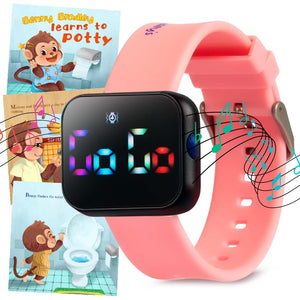
Potty Training Watch
Once your child is past the fear stage, a watch timer turns potty trips into a game — scheduled reminders they control. Takes the "being told to go" dynamic out of the equation.
View on Amazon →Tools That Actually Help
Beyond the physical setup, a few approaches speed up the fear resolution:
Books about potty training: "Everyone Poops," "Once Upon a Potty," "Potty" by Leslie Patricelli. Normalize the concept before you're asking them to do it.
Stuffed animal practice: Let the child "teach" their bear or doll to use the potty. Demonstrating mastery to a "student" builds confidence and familiarity.
Watching without pressure: Kids learn from observation. Having them come watch you (or an older sibling) use the toilet removes the mystery. What's scary is often what's unknown.
Potty songs and rituals: Create a predictable ritual around potty time — same song, same routine. Predictability reduces anxiety.
What to avoid:
- Forcing them to sit longer than they're comfortable
- Expressing your own frustration in front of them
- Bribery that escalates (once you start with candy, you're negotiating forever)
- Comparing to siblings or other kids
- Taking it away entirely ("Fine, we're done!") — this usually makes re-starting harder