Poop Withholding and Constipation in Potty Training
Poop withholding is a medical issue, not a discipline problem. It starts with pain avoidance and becomes a self-reinforcing cycle. Address the physical discomfort first — stool softeners, fiber, proper positioning — then remove the performance pressure. Forcing makes it significantly worse.
📋 Jump to Section
The Withholding Cycle — How It Starts
Understanding the cycle is essential because it explains why standard potty training approaches don't work here — and can backfire badly.
The typical progression:
- Child experiences a painful poop (constipation, hard stool, uncomfortable toilet position)
- Child learns: "Holding = pain goes away temporarily"
- Child begins consciously withholding at the urge
- Held stool dries out, becomes larger and harder
- Eventually releases — even more painful than the original trigger
- Child's avoidance behavior strengthens
- Cycle repeats, worsening with each iteration
This can escalate into functional constipation with overflow soiling — where liquid stool leaks around a hard stool mass and the child can't control it. At this point, it's a medical condition that needs treatment, not a potty training issue at all.
The worst thing you can do is pressure the child to sit on the toilet. Pressure + pain association = stronger withholding. This is genuinely counterproductive.
Recognizing Withholding Behavior
Signs of poop withholding (different from just being constipated):
- Child crosses legs, squats, hides behind furniture, or holds their bottom at the urge
- Child shows obvious distress at the sensation but resists sitting on the potty
- Fewer than 3 bowel movements per week
- Pellet-like or very hard, dry stools
- Soiling accidents (small amounts in underwear) alongside refusal to poop on potty — this is often overflow
- Stomach pain and loss of appetite
- Requesting a diaper specifically for pooping
The diaper request is actually a good sign: The child is communicating the urge rather than withholding completely. Honor this initially while you address the root cause.
Physical Fixes First
Before any training work, the stool consistency must be fixed. Nothing else works while they're in pain.
Stool softeners: Miralax (polyethylene glycol) is the standard pediatric recommendation — it's tasteless, mixes into any liquid, and is safe for extended use. Dose with your pediatrician's guidance. The goal is soft stools that are painless to pass.
Dietary fiber:
- Increase fruits: pears, prunes, peaches, berries
- Vegetables: broccoli, peas, beans
- Whole grains instead of refined
- Reduce constipating foods: bananas, white rice, cheese, excessive milk
Hydration: Adequate water intake is essential for soft stools. Juice (especially prune or pear juice) can help acutely.
Positioning: Feet must be supported, not dangling. The squatting position (knees above hips) is physiologically ideal for defecation. A toilet step stool isn't optional for kids on the big toilet — it's functional anatomy.
Timing: The gastrocolic reflex fires 20-30 minutes after eating, especially breakfast. Sit the child on the toilet during this window — they're most likely to have an urge, and the stool is usually softer in the morning.
Training Approach for Withholders
Once the physical component is managed, use a gradual, zero-pressure approach:
Step 1: Allow diaper/pull-up pooping without judgment. If they request a diaper, give it. Getting them comfortable with the urge (not fighting it) is the first goal. Fighting the withholding behavior directly makes it worse.
Step 2: Move the diaper pooping into the bathroom. They still wear the diaper, but the habit of going to the bathroom to poop is established. Do this for 1-2 weeks.
Step 3: Poop in the diaper while sitting on the closed toilet. Same diaper, but sitting on the toilet lid. Maintains the behavior while introducing the environment.
Step 4: Poop in the diaper on the open toilet. Cut a hole in the bottom of the pull-up if needed. The stool goes into the toilet; the diaper provides the security feeling.
Step 5: Transition to no diaper. Once they're comfortable with steps 1-4, the diaper removal is usually accepted. The association has shifted from "toilet = pain" to "toilet = normal."
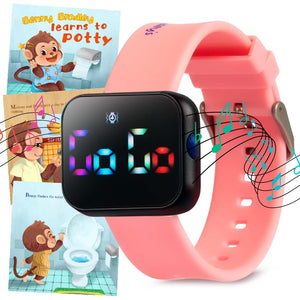
Potty Training Watch
Once poop withholding is resolved, a potty watch reinforces the routine of regular bathroom visits. Timed reminders after meals catch the gastrocolic reflex window — turning consistent practice into habit.
View on Amazon →When to See a Doctor
Poop withholding that's progressed significantly needs medical oversight. See your pediatrician if:
- Your child hasn't had a bowel movement in 3+ days despite home interventions
- There's blood in or on the stool
- Child has soiling accidents (leaking) alongside constipation
- The child is complaining of abdominal pain
- The issue has persisted for more than 2-3 weeks without improvement
- Your child is over 4 and still refusing to poop on the toilet at all
Pediatricians deal with this constantly — it's one of the most common GI complaints in toddlers. You're not overreacting by bringing it up. Early intervention prevents the constipation from becoming severe, which can require more aggressive treatment.