Potty Training While Traveling: Tips for Road Trips and Flights
Travel during potty training is manageable — but you need to plan for it. Bring a portable potty, build bathroom stops into your route, use pull-ups strategically (not shamefully) for unavoidable stretches, and give your child a heads-up about what bathrooms will look like. Expect one step back, plan accordingly.
📋 Jump to Section
Prep Before You Leave
Most travel potty disasters are preventable with 15 minutes of preparation before you're in the car.
Talk to your child about what's coming. Kids handle unfamiliar bathrooms better when they're not a surprise. "Airplane bathrooms are tiny and loud. Gas station bathrooms smell different. The potty at grandma's house is different from ours." Setting expectations prevents the refusal-out-of-shock response.
Decide your pull-up strategy in advance. Are you using them for the flight only? Just for sleeping? Not at all? Make the decision before you're stressed at the airport. Communicate it to the child without shame: "We use travel pants for the plane ride. Same as underwear when we land."
Pack the right bag. Travel potty kit should include:
- Portable travel potty or collapsible potty seat
- 3-4 extra changes of clothes (not 1 — 3)
- Wet bags or double-zipped plastic bags for dirty clothes
- Flushable wipes
- Portable changing pad or disposable toilet seat covers
- Hand sanitizer for when you can't reach a sink
Hydration management. Don't restrict fluids — dehydration is bad and withholding water from kids is not the answer. Do be mindful of timing: 30-45 minutes before a long car stretch is not the time for a big juice box.
Road Trip Strategies
Road trips are actually more manageable than flights because you have more control. The key is planning your stops, not hoping for the best.
Build in 60-90 minute bathroom stops. Even if the child says they don't need to go. "We're stopping so everyone can try." This prevents the emergency stop scenario where you're pulled over on the shoulder.
Use a potty watch or phone timer. It's easy to lose track of time during a long drive. Set a recurring alert for 60-75 minute intervals as a reminder to plan the next stop.
Car-side potty option. A portable potty in the back of an SUV or wagon is not glamorous, but it's functional. Pull over, open the hatch, done. Preferable to a desperate gas station situation.
Rest stop recon: Most rest stops have reasonably clean bathrooms. Truck stops are usually cleaner than you'd expect. Gas station bathrooms vary — check the quality before you commit to a 2-minute sprint with a toddler.
Seat protection: A waterproof car seat cover or pad is essential. Even with perfect planning, accidents happen in cars. Leather and fabric seats are both miserable to clean. A $20 waterproof cover prevents a miserable 30-minute cleanup on the side of the road.
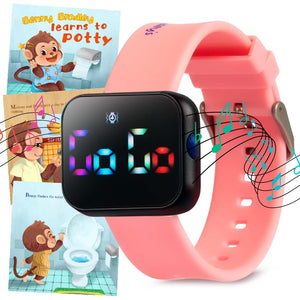
Potty Training Watch
Set the watch to 60-75 minute intervals and let it handle the timing reminder so you can focus on driving. When it beeps, it's stop time. Takes one cognitive task off your plate on an already-complex travel day.
View on Amazon →Flying with a Potty Training Toddler
Flights are harder than road trips because you don't control the timing. Here's how to manage:
Use a pull-up for the flight. This is pragmatic, not a failure. You cannot always get to an airplane bathroom (seatbelt sign, turbulence, line). The pull-up is insurance, not training reversal. Call it "airplane underwear" if that helps.
Use the airport bathroom before boarding. Every time. This is non-negotiable — it's the last clean, accessible bathroom for a while.
Airline bathrooms: Small, loud, motion-affected. Brief your child before you go. Bring the toilet seat insert if they're prone to falling-in fear. Let them flush themselves (or not) on their terms.
Aisle seat is mandatory. Middle seat with a potty-training toddler is a nightmare. Book an aisle seat. Pay the upgrade fee if necessary — it's worth it.
Watch fluid intake. Juice boxes during boarding means a full bladder at altitude. Give water rather than sugary drinks; it hydrates without the same urgency.
Watch for signs throughout the flight. Even with a pull-up, if the child signals the urge, take them to the bathroom — this reinforces the signal recognition and keeps the habit going.
Managing at Your Destination
You've arrived. Now your child needs to adapt to a new bathroom environment.
Tour the bathroom immediately upon arrival. Before unpacking, before anything — locate the bathroom, show it to the child, let them inspect it. Familiarity reduces refusal.
Bring your own potty seat insert. Familiar equipment reduces "this is different" anxiety. A $15 foldable travel potty seat that collapses into a bag is worth the bag space.
Expect some regression at the destination. New environment, different routine, excitement and overstimulation — all of these increase accident risk. Pack extra clothes and plan to go back to more frequent prompted bathroom visits for the first 1-2 days.
Resume normal protocols as quickly as possible. The sooner the destination feels like "normal with different scenery" rather than "all rules are different," the faster the child's routine stabilizes.
Essential Gear for Travel
- Portable travel potty (OXO Tot, BabyBjörn Travel Potty) — folds flat, essential for road trips
- Folding toilet seat insert — sits on top of adult seat, makes any toilet toddler-friendly
- Waterproof seat cover for car — place under the car seat, save your upholstery
- Wet bag — seals dirty clothes with no smell, reusable, worth having two
- Flushable wipes — more travel-friendly than dry paper, especially for new environments
- Portable step stool (collapsible) — if your child needs feet support on adult toilets